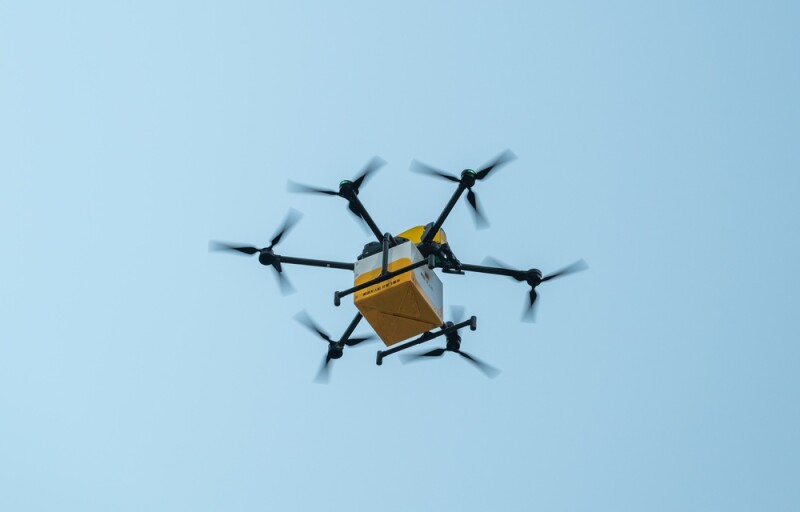
The U.S. commercial drone industry is at an inflection point. After years of incremental progress, the FAA's landmark Part 108 Beyond Visual Line of Sight (BVLOS) rule is expected to takeeffect later this year, unlocking a new era of scaled commercial drone operations across delivery, infrastructureinspection, public safety, perimeter protection and beyond. It's a pivotal moment for drone operators to getahead of the most significant regulatory shift the commercial drone industry has seen.
Today, AirData UAV announced it is joining the Commercial Drone Alliance (CDA), bringing its operationalplatform into the industry's broadest coalition for drone policy and progress. We are excited to activelycontribute to the policies and standards that will define the next chapter of the U.S. drone economy through theCDA.
Part 108 introduces sweeping new operational requirements across pre-, during and post-flight documentation,personnel roles, risk-categorized operational areas, and mandatory continuous data reporting, and AirData'splatform is already built to meet them.
"We are at a critical moment for the drone economy, as the industry moves toward broader BVLOS operations and frameworks like Part 108, access to scalable, reliable operational data such as that which AirData provides will help tosafely unlock the full potential of the drone economy." — Lisa Ellman, Chief Executive Officer of the Commercial Drone Alliance
AirData's platform delivers the tools operators will need to meet Part 108's requirements, including: checklists,automated compliance documentation, flight logging across every mission, and fleet-wide analytics that giveprogram managers visibility into operational risk. With more than 61 million flights across 450,000 pilots and850,000 drones globally, AirData has been building the compliance infrastructure the industry now needs.
As the industry's leading policy advocate, the CDA has been central to advancing the regulatory frameworks.AirData looks forward to working alongside the CDA and its members — including leading drone operators,manufacturers, and technology providers — to help shape the policies and operational standards that will definethe BVLOS era.
We are excited to join the CDA and work alongside its members, who represent many of the world's premier drone operators, to help accelerate the growth of the U.S. drone economy. We have long served as the intelligence backbone for drone operations, and we look forward to leveraging our data, insights, and experience to enable scalable, compliant, and mission-critical drone programs, particularly as frameworks like Part 108 unlock the next phase of scaled BVLOS operations in the United States. — Eran Steiner, CEO and Founder of AirData UAV
AirData's platform is available today, giving public safety agencies, enterprise operators, and drone programs ofevery size the maintenance documentation, pilot currency tracking, asset management, checklist discipline, andoperational data history that regulators will expect when Part 108 takes effect.
5 Reasons Drone Resellers Should Add Software to Their Business
November 16, 2026
•
x min read
Commercial drone customers need more than aircraft and accessories. They also need ways to manage flight records, track maintenance, monitor aircraft performance, and keep their operations organized.
For drone dealers and distributors, these needs present an opportunity to sell software alongside hardware.
Adding drone management software to your product lineup can increase revenue per sale, generate annual renewals, and give customers a reason to keep working with you after their equipment is delivered.
Here are five reasons to consider becoming a drone software reseller.
1. Generate recurring revenue
Drone hardware sales depend on new purchases, upgrades, and equipment replacements. Software subscriptions create revenue opportunities between those purchases.
Many drone software platforms offer annual subscriptions, allowing resellers to earn recurring revenue through renewals.
As customers add aircraft, pilots, and departments, they may also need additional software licenses or features. For resellers, this creates opportunities to grow existing accounts without relying entirely on new hardware sales.
2. Increase the value of every drone sale
A drone is only one part of a commercial drone program.
Customers also need to manage flight logs, aircraft maintenance, battery health, pilot qualifications, and reporting.
Offering drone management software alongside hardware helps customers put these systems in place early.
For example, a utility company purchasing several drones for inspections may also need automated flight logging, maintenance schedules, and compliance reports. By including software in the initial sale, resellers can provide a more complete package while increasing the value of each deal.
3. Build long-term customer relationships
Customers may go years between major drone purchases, but their operational needs continue.
Software gives resellers more opportunities to stay involved after the initial sale. As drone programs grow, customers may need additional licenses, equipment tracking, reporting capabilities, or live streaming.
Fleet management software can also help customers monitor aircraft usage, battery health, and upcoming maintenance. This information can inform conversations about replacement equipment, batteries, and fleet expansion.
For resellers, these are opportunities to support existing customers and generate additional business.
4. Serve customers with mixed drone fleets
Many commercial drone programs use aircraft from multiple manufacturers. Different teams may use different drones and flight applications depending on their work. That creates a challenge when customers need a single view of their operations.
Drone management software that supports multiple manufacturers allows customers to bring supported flight records, aircraft information, and maintenance history into one place.
For dealers carrying several drone brands, this makes it possible to offer the same software platform across a wider range of customers. It also means customers can keep using compatible drones and applications they already own.
5. Expand your offerings without additional inventory
Adding hardware products often means purchasing inventory, managing storage, and handling shipping. Cloud-based software doesn’t require physical inventory.
Resellers can add software subscriptions to their existing offerings without stocking another product or managing additional shipping logistics.
Software also fits alongside services many drone dealers already provide, including training, fleet deployment, maintenance, and technical support.
What to look for in a drone software reseller program
Choosing the right software partner matters. The platform needs to work for your customers, and the reseller program needs to make business sense.
Before joining a program, consider:
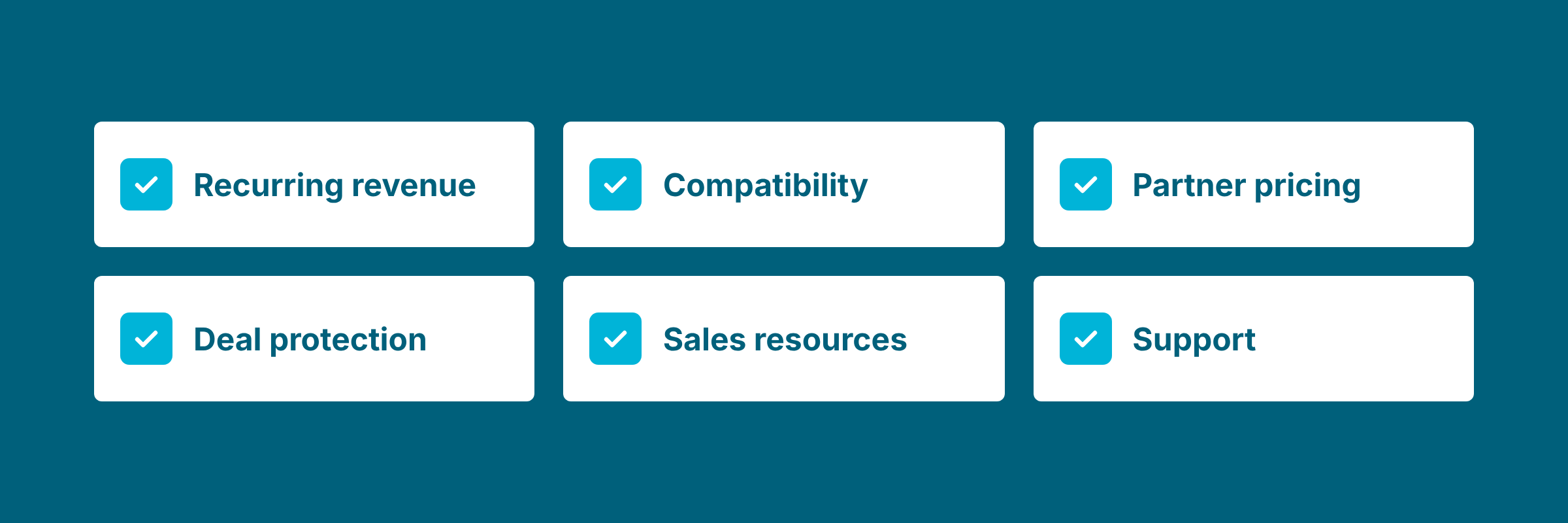
Recurring revenue: Can you earn revenue through annual renewals and account expansion?
Compatibility: Does the software support the drone manufacturers and flight applications your customers use?
Partner pricing: Are discounts and incentives competitive?
Deal protection: Can you register opportunities and protect partner-sourced deals?
Sales resources: Does the provider offer training, demos, case studies, and marketing materials?
Support: Can you get help with pricing, product configuration, and technical questions?
These factors can make a significant difference in how easily you can sell the software and support your customers.
The AirData reseller program
AirData UAV offers a reseller program for drone dealers, distributors, and solution providers looking to add drone management software to their offerings.
AirData is a system of record for drone operations, bringing flight records, aircraft, pilots, maintenance, and compliance into one platform. With support for more than 180 drone types and 60 flight applications, AirData works with many of the drones and applications customers already use.
AirData reseller benefits include:
Competitive partner pricing on annual software subscriptions
Recurring revenue through renewals and account growth
Deal registration for eligible partner-sourced opportunities
Sales resources including training, demos, battlecards, and case studies
Direct support for pricing, scoping, and customer requirements
Marketing support including eligible co-marketing opportunities and reseller listings
Resellers can also offer additional AirData Enterprise capabilities, including Live Streaming, Asset Management, and Rewind & Record.
Become an AirData reseller
Selling drone management software gives resellers another source of revenue and more opportunities to support existing customers.
AirData’s reseller program makes it easy to add software to your product lineup, with no physical inventory required and support from the AirData team.
AirData Insights November 2026: Fleet Overview, Part-Level Maintenance & Part 108 Update
November 9, 2026
•
x min read
Welcome to the November edition of AirData Insights, our monthly roundup of what’s new at AirData and across the drone industry.
This month, AirData added a new Fleet Overview, drone booking, and maintenance tracking down to the part, along with easier night proficiency tracking and new mission approvals. We also met with public safety teams at TEXCON, IACP, and LEDA Washington, and the FAA said Part 108 is close to the finish line.
Pilot Institute certificates import into AirData automatically, both the ones your pilots already hold and new ones as they finish, with the skills attached.
Administrators can see which courses pilots have completed and which are still in progress, along with the skills each one carries. For programs that need to show training records during an audit or before taking on new kinds of operations, that’s one less set of records to keep in sync by hand.
With Part 108 nearing publication, now is a good time to make sure your program is ready for it. Dustin Schocken, Director of Regulatory Affairs & Product Safety at AirData, shares what a program needs in place before the rule lands.
He covers building a just safety culture on real telemetry and incident data, setting GO/NO-GO standards for equipment and people, and training crews on the situations that don’t go to plan.
Great conversations at TEXCON, IACP, and LEDA Washington
Thanks to everyone who stopped by the AirData booth at TEXCON in Arlington, IACP in Orlando, and LEDA Washington. It was great to hear how your DFR and public safety programs are growing, and what you’d like to see from AirData next.
Next stop: ElevateUAV in Miami. Details are in On the calendar below.
The final BVLOS rule has been under White House review since July, and the FAA hopes to publish by year end. It also awarded $12 million to 19 test-site projects. If your program plans to fly under Part 108, Dustin’s readiness post above is a practical place to start while the final text is pending.
Canada, Australia, Brazil, and the UK are each writing BVLOS into their regulations instead of handling it case by case. Worth a read if you fly in more than one country, or want a sense of where the US rule fits internationally.
California, Arizona, and Alabama now all restrict flights over ticketed events, with different boundaries, exemptions, and penalties. Operators say the rules are getting hard to track across state lines, so if you fly near large events or in more than one state, check each state’s rules before the flight.
Most of this month’s releases are about fleet and asset management: seeing your whole fleet at a glance, booking equipment, and tracking maintenance down to individual parts. There are also new dashboards, report options, and updates to Pilots and Missions.
Fleet and asset management
New Fleet Overview Enterprise only
View your entire drone fleet in one place, filtered by checkout status, grounded aircraft, or last check-in, in list or thumbnail view. View your fleet
New Equipment Booking & Calendar View Asset Management add-on required
Reserve drones and equipment independently of missions, and check availability in the new Calendar View, so teams sharing a fleet can see what’s free before they plan. Open the calendar
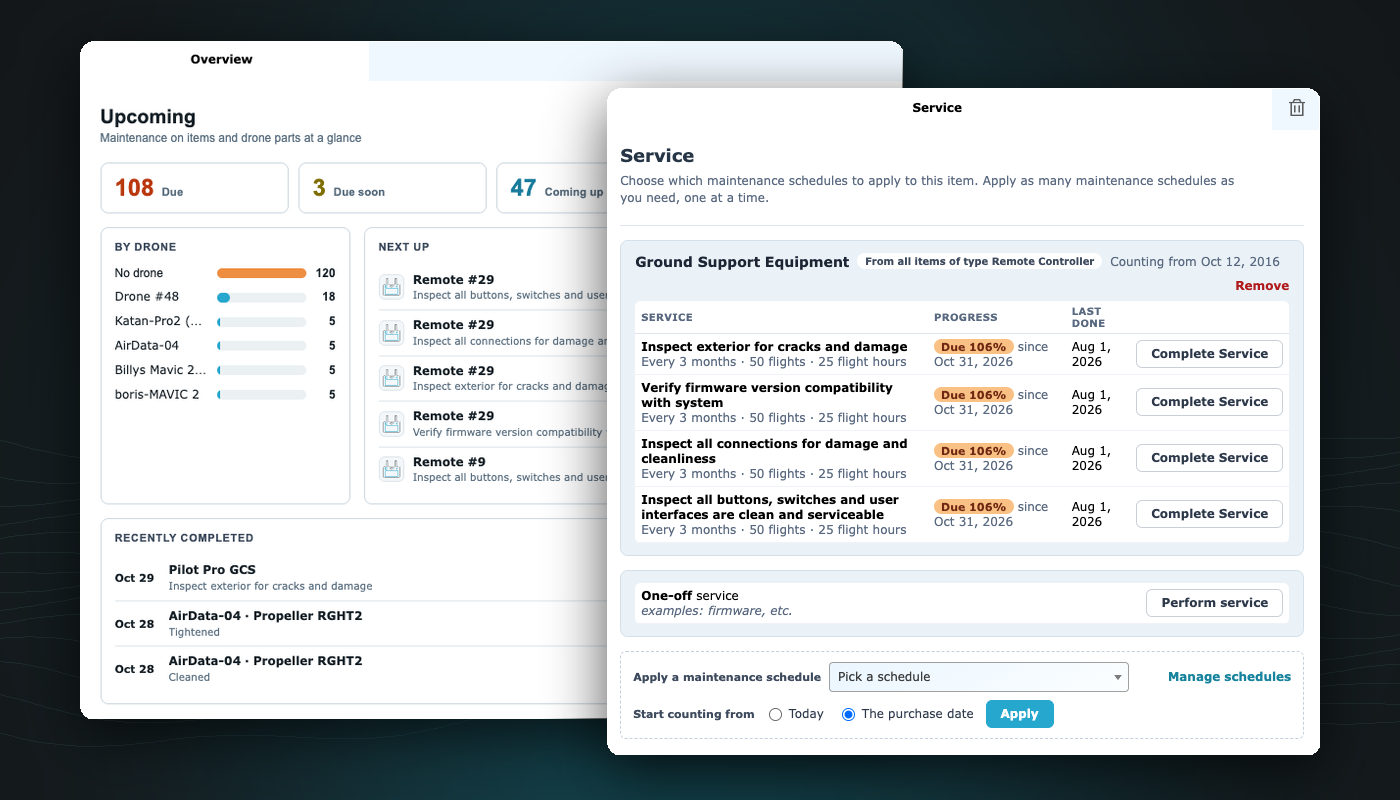
Track maintenance, service history, and defects for individual components like propellers, motors, and parachutes. Maintenance and equipment reports now include it all. Track part maintenance
Expanded Maintenance Tracking for Items Asset Management add-on required
Schedule one-time or recurring maintenance for cameras, remotes, Remote ID modules, and more. New Items inherit their category’s schedule automatically. View Item maintenance
Mobile Maintenance & Defect Reporting Asset Management add-on required
Scan an equipment QR code in the mobile app to view part details and history, log services, and report defects from the field.
Every open defect in one report Asset Management add-on required
Every defect logged across your equipment in one report, so nothing gets missed before the next flight. Pilots can log one in the field by scanning a QR code. Open your reports
Dashboards and reports
New Operations and Safety dashboards Enterprise only
Flight activity, fleet utilization, maintenance, compliance, and alerts in one view under the Home tab. Open your dashboard
New report designs, with maps and your logo
Standard Flight Reports have a new look, and can now carry an overview map, your logo, landing time, and checklist status. See your reports
Section reports by drone, pilot, or group Enterprise only
The new Section By option in Standard Flight Reports splits reports by drone, pilot, or flight group. Create a report
Pilots and missions
Two updates to the Pilots table
See each pilot’s night hours over the last 30, 60, and 90 days, set inactivity alerts to require a minimum, and toggle inactive pilots off to focus on your active crew. View pilots
Two updates to Missions Enterprise only
Route missions to the right approvers by risk score, airspace, or mission type, and auto-approve the routine ones. The new Mission Summary tracks scheduled, flown, approved, and pending missions for any date range. Open missions
Every flight comes with its full telemetry as well as the summary, so you can look back at altitude, signal strength, wind, warnings, and aircraft behavior from takeoff to landing. It’s useful for incident reviews and training debriefs, or just for understanding why a flight went the way it did.
To find it: open any flight, then click the 3D Player tab.
Gulfstream Park, Hallandale Beach. Live drone demos, manufacturer sessions, and enterprise UAS conversations. Use code AIR20 for 20% off registration.
Dec 6 – 10
IHEEP: see you in Austin
JW Marriott Austin. The International Highway Engineering Exchange Program brings together DOTs, transportation engineers, and agency leaders to share new technology and best practices.
Trevor has spent 6.5 years making sure teams flying with AirData get real value from the platform, and that their feedback reaches the people building it. He also leads our customer success team, which he says mostly means taking credit for their good work.
What excites him most is watching drone programs grow up, from a couple of drones and a spreadsheet to a full record of every flight.
Outside of work, Trevor and his wife recently welcomed their third daughter, leaving him outnumbered four to one. You’ll find him on San Diego’s trails on his e-mountain bike, mostly for the help up the hills.
AirData and Pilot Institute Launch Integration to Automate Drone Pilot Training and Certification Tracking
November 4, 2026
•
x min read
New integration automatically syncs Pilot Institute training certificates and skills into AirData, helping drone pilots and fleet managers keep training records organized and up to date.
AirData UAV and Pilot Institute have partnered to make managing drone pilot training records and certifications easier. The new integration automatically syncs completed Pilot Institute courses, certificates, and associated skills directly into AirData, giving pilots and fleet administrators a centralized place to manage training qualifications alongside their flight operations.
For drone programs managing multiple pilots, tracking certifications and training requirements can involve significant administrative work. Pilots often need to download and submit certificates manually, while fleet managers must collect those records, track training progress, and monitor upcoming expirations.
With the AirData and Pilot Institute integration, that process is now automated. Previously earned and newly completed Pilot Institute certificates automatically appear in AirData, along with the skills associated with each certification.
Simplifying Drone Pilot Certification and Training Management
Keeping pilot training records accurate and accessible is an important part of managing a drone program, particularly as teams grow and training requirements become more complex.
The integration connects Pilot Institute's training platform with AirData's drone operations management system, allowing organizations to manage pilot qualifications alongside flight history, aircraft information, maintenance records, and other operational data.
"We've automated flight record syncing for years, and we see the same need with pilot certifications," said Eran Steiner, CEO of AirData UAV. "Pilot Institute has built an excellent training program for drone pilots, and integrating it with AirData makes it easier for organizations to manage qualifications at scale. We're also automatically extracting the skills pilots have earned, giving fleet managers the information they need to assign the right pilots to the right missions."
Key Features of the AirData and Pilot Institute Integration
The integration offers several capabilities for individual drone pilots and organizations managing larger fleets:
Automatic certificate synchronization: Previously earned and newly completed Pilot Institute certificates automatically import into AirData as badges, eliminating manual uploads.
Training progress tracking: Fleet administrators can see which courses pilots have completed and which are still in progress.
Pilot skills and qualifications: Skills associated with completed courses are automatically identified, helping administrators understand pilot capabilities when assigning missions.
Certification expiration reminders: Pilots and administrators receive reminders about upcoming expirations to help keep qualifications current.
Verified training records: Certificates are imported directly from Pilot Institute, giving pilots a reliable training record they can share with employers and clients.
Centralized pilot records: Training certificates and skills are maintained alongside flight history, aircraft information, and other drone operational records.
Connecting Drone Training With Flight Operations
Pilot training is an essential part of running a drone program, but training records are often managed separately from day-to-day flight operations.
By bringing these records into AirData, organizations can reduce the time spent collecting certificates, checking qualifications, and maintaining training documentation.
Fleet administrators can review completed courses and pilot skills when preparing for missions, while individual pilots have easier access to their training history and qualifications.
"Our students spend a lot of time earning their certifications and developing their skills. We want that information to be easy for them to access and useful to the organizations they work with," said Greg Reverdiau, Co-Founder and Head of Training at Pilot Institute. "AirData is already an important tool for pilots and drone programs managing their flight operations. This integration gives our students a direct way to maintain their training records alongside their flight experience, without the extra administrative work."
The partnership brings together two established platforms in the drone industry. AirData supports more than 470,000 pilots worldwide and has logged over 68 million drone flights, while Pilot Institute has trained more than 150,000 Part 107 students.
How to Connect Pilot Institute to AirData
The Pilot Institute integration is available across all AirData subscription levels, including free accounts.
To connect your accounts:
Log in to your AirData account.
Navigate to My Account > Pilot Institute.
Connect your Pilot Institute credentials.
Your completed course certificates will automatically import into AirData.
Once connected, your Pilot Institute training records and associated skills can be maintained alongside your other drone operational records.
Get Started With Automated Drone Pilot Certification Tracking
Whether you're an individual drone pilot maintaining your qualifications or a fleet administrator managing training across a larger team, the AirData and Pilot Institute integration helps reduce manual recordkeeping and makes pilot training information easier to access.
Log in to AirData to connect your Pilot Institute account and start syncing your training records today.